
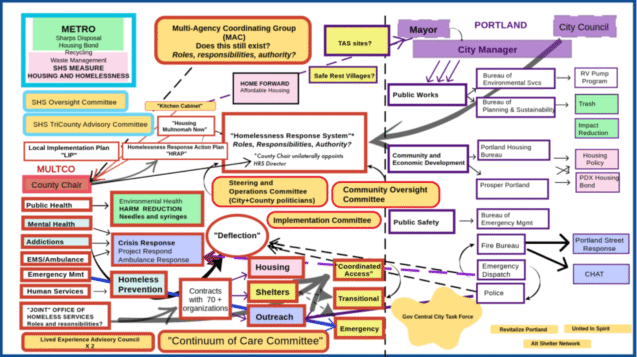
A Yiddish word, “far-potshket”, does a great job of encapsulating the problem – it refers to efforts to fix things that end up making them worse. The
The Big Issues
While at the County, I methodically engaged county professionals, other subject matter experts and people with lived experience to map the county’s systems and services and create blueprints for transformation.
Fortified by that knowledge - and my recognition of how County politics sandbagged reform - I am now convening stakeholders in order to plot action steps for changes that have only grown more urgent. I will share these detailed plans on this site.
In the meantime, the following are solution summaries that I have recently articulated in other channels. I have also included key reports I commissioned while at the County.
Homelessness
What we have: A scattered array of shelters with wide variation in (and no rationale for) cost per bed, no correlation between the types of shelters being funded and the needs of people being served, and no clear tracking of who is going where and whether they are progressing to stable, long-term housing.
What we need: A shelter ecosystem designed to function as part of a comprehensive homelessness to housing continuum. Start with a real count of people, structure services to meet people’s actual needs, budget effectively based on the resources available, measure results and course correct as needed.
Shelters in Multnomah County – 2025 Overview
This report provides a comprehensive overview of shelters and alternative housing models across Multnomah County as of September 2025, categorizes more than a dozen types of shelter programs, including micro-villages, tiny home villages, Safe Rest Villages (SRVs), managed pod villages, Temporary Alternative Shelters (TAS), congregate shelters, family shelters, and transitional housing sites. This highlights the diversity of approaches, ranging from small to large-scale county-run programs.
Approach to Homelessness in Multnomah County
Homelessness is the biggest crisis facing Multnomah County. Billions of dollars, and immeasurable amounts of time and energy spent on plans to “end homelessness”, meaningful goals and ways to achieve them have never been established. Until problems with the County’s approach to ending homelessness are clearly identified and directly addressed, the system will not succeed in ending homelessness.
MENTAL HEALTH
What we have: A disjointed, disconnected array of services for prevention, crisis response, and treatment of mental illness or addiction. As a result, many people end up in crisis in jails and emergency rooms before they can get mental health care, leading to costly stays at the Oregon State Hospital that drain state coffers before spitting people back out into bad situations without support - too often the streets.
What we need: An “air traffic control” team that sees the big picture, connects the dots and directs the fragmented pieces of our disconnected behavioral health and homeless services systems. This requires:
- Methodically assessing what’s needed for prevention, treatment, crisis response, and recovery (including housing and shelter) in a holistic, person-centered system of mental health care.
- Restructuring siloed programs into a continuum of linked services and supports designed to meet people’s needs.
- Identifying incremental achievable goals and overarching outcomes that define success based on people’s movement through a system of care rather than a revolving door that makes them worse.
- Rigorously monitoring and assessing.
- Course correcting as necessary.
Multco Mental Health System Analysis
In 2017, Multnomah County commissioned the Human Services Research Institute (HSRI) to conduct a comprehensive review of its publicly funded mental health system. The study focused on individuals of all ages who rely on public funds for mental health care, with the goal of providing a data-driven understanding of how well the system meets community needs and how resources are aligned. The vision was to ensure a 21st-century mental health system.
Substance Use Disorder Continuum of Care
What we have: A disconnect between policies and the real world; political goals and human needs, types and levels of services and what people actually need, supply and demand for services.
What we need: To shift from a system organized around illness and crisis to one based on stabilization, wellness and recovery. From a problem and program based system to a person based system with centralized, effective leadership over the whole continuum, including optimizing data collection and management.
SUBSTANCE USE DISORDER CONTINUUM OF CARE
Leaders from the front line of the SUD continuum share their perspectives on what works, what doesn’t, and what policymakers should know as they consider investing hundreds of millions of dollars in building and maintaining an effective SUD system of care.
Behavioral health (Substance Use Disorder (SUD) and mental illness) is a crisis in our region and state. Fortunately, policymakers have recognized the need for commitment of substantial resources to address the crisis.
Recent Blogs
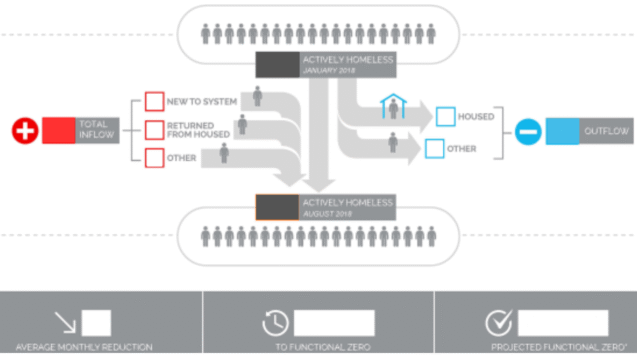
What is a by-name list? why is it so crucial to ending homelessness? Does the county have one?
A By-Name List (BNL) is a comprehensive list of every person in a community experiencing homelessness, updated in real time. “Using information coll

